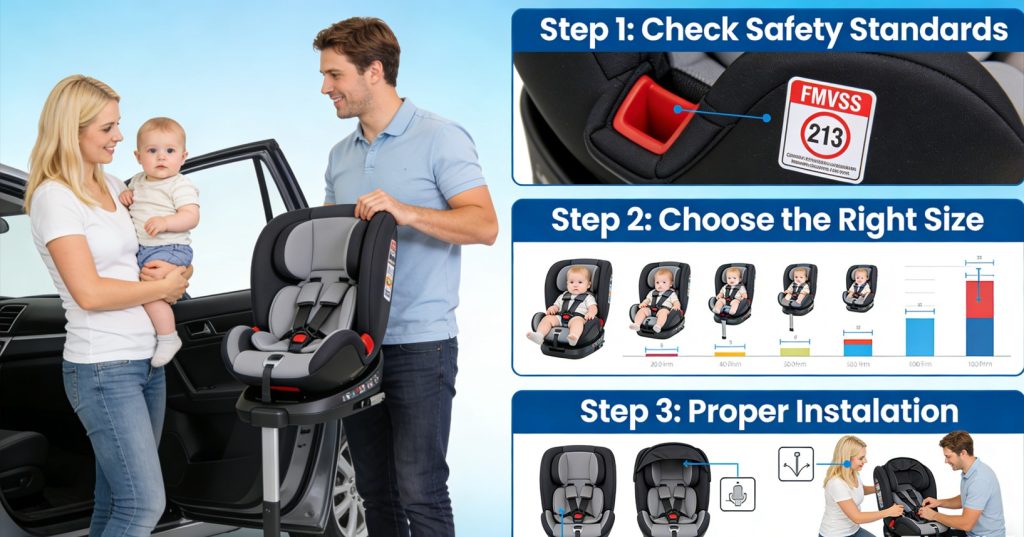
For every parent, strapping your baby into the car brings a quiet mix of joy and worry. A safe car seat isn’t just a piece of baby gear—it’s a life-saving restraint that can reduce the risk of fatal injury by up to 71% for infants. In 2026, safety standards have evolved dramatically, with stricter crash testing, smarter installation tech, and healthier materials taking center stage. This complete, up-to-date guide will walk you through choosing the safest car seat for your baby, blending expert recommendations, global safety norms, and modern parenting needs to help you decide with confidence.
Understand the Non-Negotiable: Rear-Facing Is Non-Negotiable for Babies
The single most important rule for infant car safety is rear-facing installation. Leading pediatric and road safety groups—including the American Academy of Pediatrics (AAP) and NHTSA—strongly advise keeping children rear-facing until at least age 2, and many safety experts now recommend extending rear-facing use to age 4 whenever possible.
Why is rear-facing so critical? Babies have large, heavy heads and weak, underdeveloped neck muscles. In a front impact, a forward-facing seat whips the head forward, straining the cervical spine. A rear-facing seat acts as a cradle, evenly distributing crash forces across the back, shoulders, and head, drastically lowering the chance of life-altering spinal or brain injury. Data shows children under 2 are 75% less likely to suffer serious injury or death when riding rear-facing.
For newborns to 15 months (40–105cm under the i-Size standard), only rear-facing seats are approved. Skip any seat that encourages early forward-facing; prioritize models with high rear-facing height and weight limits to maximize protection as your baby grows.
Start with the Gold-Standard Safety Certifications
Certifications are your first filter for safety. In 2026, global and Chinese standards have become stricter, especially around side-impact protection and material safety. Never buy a car seat without valid, verifiable certification.
- GB 27887-2024 (China’s New National Standard)Mandatory for all seats sold in China, this updated rule adds strict side-impact testing, head containment rules, and clearer height-based grouping. Look for the 3C mark paired with the new GB 27887-2024 label—older 2011-certified seats no longer meet today’s full safety requirements.
- ECE R129 (i-Size, EU Standard)Widely regarded as the world’s toughest car seat regulation, i-Size uses height instead of weight for more accurate sizing, mandates side-impact testing, requires rear-facing until at least 15 months, and restricts harmful chemicals like PFAS. Seats with E4 i-Size (Dutch certification) are especially trusted for rigorous testing.
- FMVSS 213 (US Standard)A reliable benchmark for seats sold in North America, focusing on crash performance and structural integrity.
Top-tier seats often carry dual certifications (e.g., 3C + i-Size), giving you layered safety assurance. Avoid seats with faded, missing, or counterfeit certification labels—these are red flags for untested, dangerous products.
Choose the Right Type for Your Baby’s Age & Lifestyle
Car seats aren’t one-size-fits-all. Pick a type that matches your baby’s stage, your daily use, and your car.
1. Infant Carrier (0–13kg / Newborn–15 Months)
- Lightweight, portable, and detachable from the base
- Easy to carry a sleeping baby in and out of the car
- Must be installed rear-facingBest for newborns and frequent travelers. Pair with a stroller for a travel system.
2. Convertible Seat (0–4 Years / 40–105cm)
- Starts rear-facing, switches to forward-facing as your child grows
- Higher rear-facing limits to keep baby safer longer
- More durable and cost-effective than replacing an infant carrierIdeal for parents who want long-term use and maximum rear-facing protection.
3. All-in-One / 360° Rotating Seat (0–7 Years or 0–12 Years)
- Rotates for easier buckling and soothing
- Grows with your child from birth to early elementary
- Convenient but ensure it still meets strict crash standardsGreat for busy parents, but verify core safety features aren’t sacrificed for rotation.
2026 Pro Tip: Prioritize height-based sizing (i-Size) over weight-only labels—it better matches a child’s physical development and reduces misselection.
Prioritize Structural Safety: The Frame That Protects
A seat’s internal structure is its backbone in a crash. Don’t compromise on build quality.
- Integral Injection-Molded Frame + Steel ReinforcementSolid injection molding is far stronger than hollow blow molding. A built-in steel core adds rigidity, preventing collapse in high-impact crashes.
- Advanced Side-Impact Protection (SIP)Over 25% of childhood injuries happen in side impacts. Look for:
- Dynamic, pop-out side shields
- Deep, wrapped head and torso wings
- Multi-layer energy-absorbing foamTop i-Size seats limit head displacement to under 150mm in side crashes—verify this in product specs.
- Energy-Absorbing FoamEPP (high-grade, durable, shock-absorbent) is superior to EPS. Full coverage (not just small patches) delivers better protection.
Installation That Won’t Fail: Secure & Error-Proof
Even the safest seat is useless if installed wrong. Studies show up to 80% of car seats are installed incorrectly. Choose systems that minimize human error.
- ISOFIX + Support Leg + Anti-Rotation BarThe gold-standard combination:
- ISOFIX hard mounts for rock-solid connection to the car
- Support leg to stabilize the seat and reduce forward rotation
- Anti-rotation panel to stop twisting in a crashFar safer than seatbelt-only installation.
- Visual & Smart Installation Alerts2026 trend: color indicators, built-in sensors, and app connectivity that beep or flash if the seat is loose, angled wrong, or buckled incorrectly. These eliminate guesswork for tired parents.
- Proper Recline AngleNewborns need a near-flat recline to keep airways open. Look for adjustable, marked recline positions—never force a seat into an unsafe angle.
Harness Design: Snug, Secure, & Easy to Adjust
The harness is what holds your baby safely inside the seat.
- 5-Point Harness (Non-Negotiable)Secures at shoulders, hips, and between the legs—spreads force across strong bones and keeps the baby positioned correctly. Avoid 3-point harnesses for infants.
- No-Thread Re-Threading HeadrestAdjusts height without re-threading straps, saving time and ensuring proper alignment as your baby grows.
- Chest Clip at Armpit LevelPositions the clip to protect the neck and chest—never place it on the belly or neck.
Fit Check: Straps should be snug enough that you can’t pinch extra fabric; the chest clip sits at armpit height.
Healthy, Skin-Friendly Materials for Delicate Babies
Modern safety includes protecting against hidden toxins. 2026 standards focus heavily on material safety.
- Class A Infant-Grade FabricBreathable, moisture-wicking, free of formaldehyde, azo dyes, and heavy metals.
- Low-VOC & Non-Toxic FoamAvoid off-gassing chemicals that irritate baby’s lungs and skin.
- PFAS-Free CertificationThe latest i-Size rules ban harmful per- and polyfluoroalkyl substances. Choose seats tested to be PFAS-free.
- Washable CoversEasy to remove and clean for spit-ups, spills, and allergies.
Smart & Comfort Features That Boost Safety
Comfort = longer, calmer rides = less distraction for the driver.
- 360° RotationSimplifies getting baby in and out, reducing the chance of improper buckling.
- Extended Leg RestSupports baby’s legs for long trips, preventing slumping.
- Ventilation & Sun CanopyKeeps baby cool and shaded, reducing fussing.
- Side-Opening Buckle CoversPrevents pinching and makes buckling faster.
Avoid These Common & Dangerous Mistakes
- Putting the baby in the front seat (always use the back seat, center position is safest)
- Using a secondhand, expired, or crash-involved seat
- Loose harnesses or incorrectly positioned chest clips
- Adding after-market head supports, padding, or toys that aren’t OEM-approved
- Turning forward-facing too early
- Ignoring installation warnings or loose seats
- Using a seat that doesn’t fit your car’s seat belt or ISOFIX points
Match the Seat to Your Car
Not all seats fit all cars. Measure your back seat space, check ISOFIX anchor positions, and test install before buying. Narrow seats work better in small cars; full-size seats need more room. Many brands offer car compatibility charts—use them.
Final Buying Checklist for 2026
Before you checkout, confirm these 10 must-haves:
- Valid 3C (GB 27887-2024) and/or i-Size (ECE R129) certification
- Rear-facing compatible until at least 105cm (age ~4)
- Integral injection-molded frame with steel reinforcement
- Full side-impact protection with deep head/wings
- ISOFIX + support leg + anti-rotation device
- 5-point harness with no-rethread headrest
- Class A, non-toxic, washable fabric
- Visual/smart installation alerts
- Proper newborn recline and ergonomic support
- Clear fit with your car’s dimensions and anchors
Conclusion
Choosing the safest baby car seat in 2026 means looking beyond brand names and trends to focus on evidence-based protection: strict global certifications, rear-facing design, robust structural engineering, error-proof installation, and healthy materials. This isn’t just a purchase—it’s a promise to protect your most precious passenger on every drive.
Take the time to install correctly, check the fit often, and keep your baby rear-facing as long as possible. A well-chosen, properly used car seat isn’t just baby gear—it’s peace of mind, every mile you travel together.
About the Author